What is Conservation Agriculture?
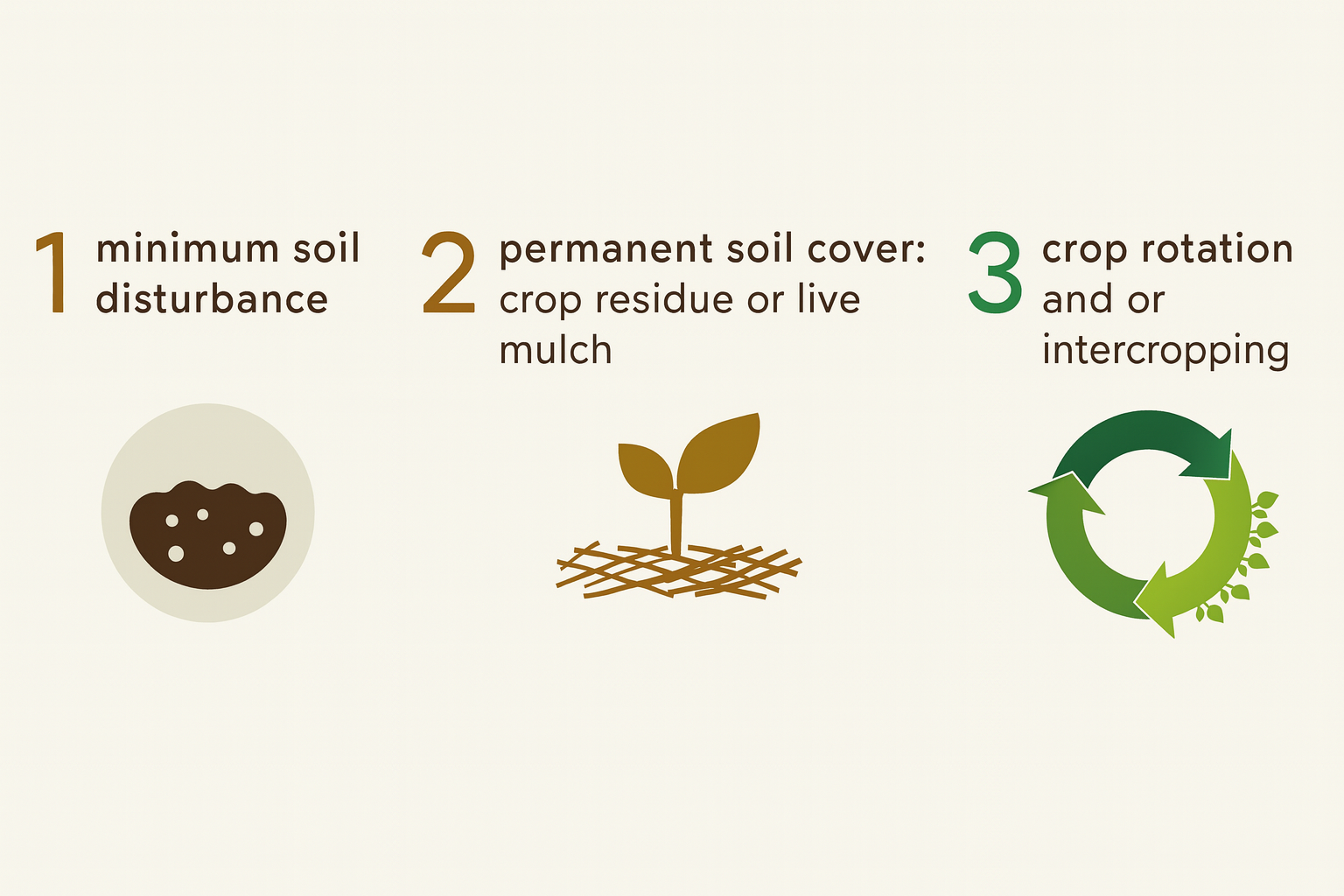
Conservation Agriculture is a concept in support of sustainable land management, environmental protection and climate change adaptation and mitigation. Food and Agriculture Organization (FAO) promotes the adoption of Conservation Agriculture principles (minimum mechanical soil disturbance (no/zero-tillage, permanent soil cover and crop rotations) that are universally applicable in all agricultural landscapes and cropping systems.
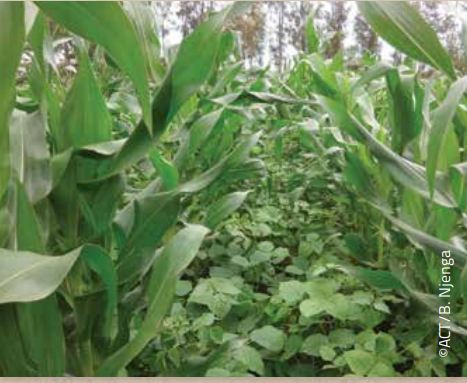
Maize under Conservation Agriculture intercropped with drought tolerant Dolichos lablab in Kenya
FAO’s support to members includes:
- Designing, formulating, and planning national strategies and policies that provide incentives for farmers to adopt Conservation Agriculture practices and invest in sustainable agricultural mechanization. This allows farmers – especially smallholders – to move away from inefficient agronomic management practices and manual labour to appropriate levels of mechanization that offer higher returns.
- Training farmers, service providers and extension agents on Conservation Agriculture practices and sustainable mechanization. Developing and disseminating training materials and guides to raise awareness and to incorporate into agricultural universities’ curricula and government programmes.
- Implementing location – specific practices and identifying suitable crops to improve production systems that are resilient to the effects of climate change, as well as identifying existing or potential markets for inputs and/or outputs.
- Increasing agricultural production by implementing Conservation Agriculture practices in support of national priorities linked to food and nutrition security.
Understanding the context In many countries, intensive crop production has depleted soils, to the extent that future production in these areas is jeopardized. Healthy soils are key to developing sustainable crop production systems that are resilient to the effects of climate change.
They contain a diverse community of organisms that help to control plant diseases, insect pests and weed populations; recycle soil nutrients; and improve soil structure with positive effects on water holding capacity, nutrient retention and supply and levels of organic carbon.
For example, in Mexico, legumes in rotation with maize contribute organic matter and nitrogen that help boost maize yields by 25 percent. Zero tillage contributes to higher wheat yields, in the range of 6 to 10 percent, because it allows for timely sowing, leads to a better crop stand, and generates big savings on tractor operations, time and fuel. On the western, Indo-Gangetic plains, the adoption of zerotillage in wheat production reduced farmer’s costs per hectare by 20 percent and increased net income by 28 percent (FAO, 2016).
Conservation Agriculture is 20 to 50 percent less labour intensive and thus contributes to reducing greenhouse gas emissions through lower energy inputs and improved nutrient use efficiency. At the same time, it stabilizes and protects soil from breaking down and releasing carbon to the atmosphere.
Conservation Agriculture is based on three interlinked principles adapted to reflect local conditions and needs:
Minimum mechanical soil disturbance (i.e. no/zero tillage) through direct seed and/or fertilizer placement. This reduces soil erosion and preserves soil organic matter.

Permanent soil organic cover (at least 30 percent) with crop residues and/or cover crops. Maintaining a protective layer of vegetation on the soil surface suppresses weeds, protects the soil from the impact of extreme weather patterns, helps to preserve soil moisture, and avoids compaction of the soil.

Species diversification through varied crop sequences and associations involving at least three different crop species. A well-designed crop rotation promotes good soil structure, fosters a diverse range of soil flora and fauna that contributes to nutrient cycling and improved plant nutrition, and helps to prevent pests and diseases.

For more information, please have a look at the full report "Save and Grow in practice: Maize, rice and wheat. Rome" at https://www.fao.org/3/i4009e/i4009e.pdfContact Us: Plant Production and Protection Division E-mail: conservation-agriculture@fao.org , NSP-Director@fao.org Web: https://www.fao.org/conservation-agriculture/en/ Food and Agriculture Organization of the United Nations Rome, Italy